
The End of Coffee
Can you even prepare for that?

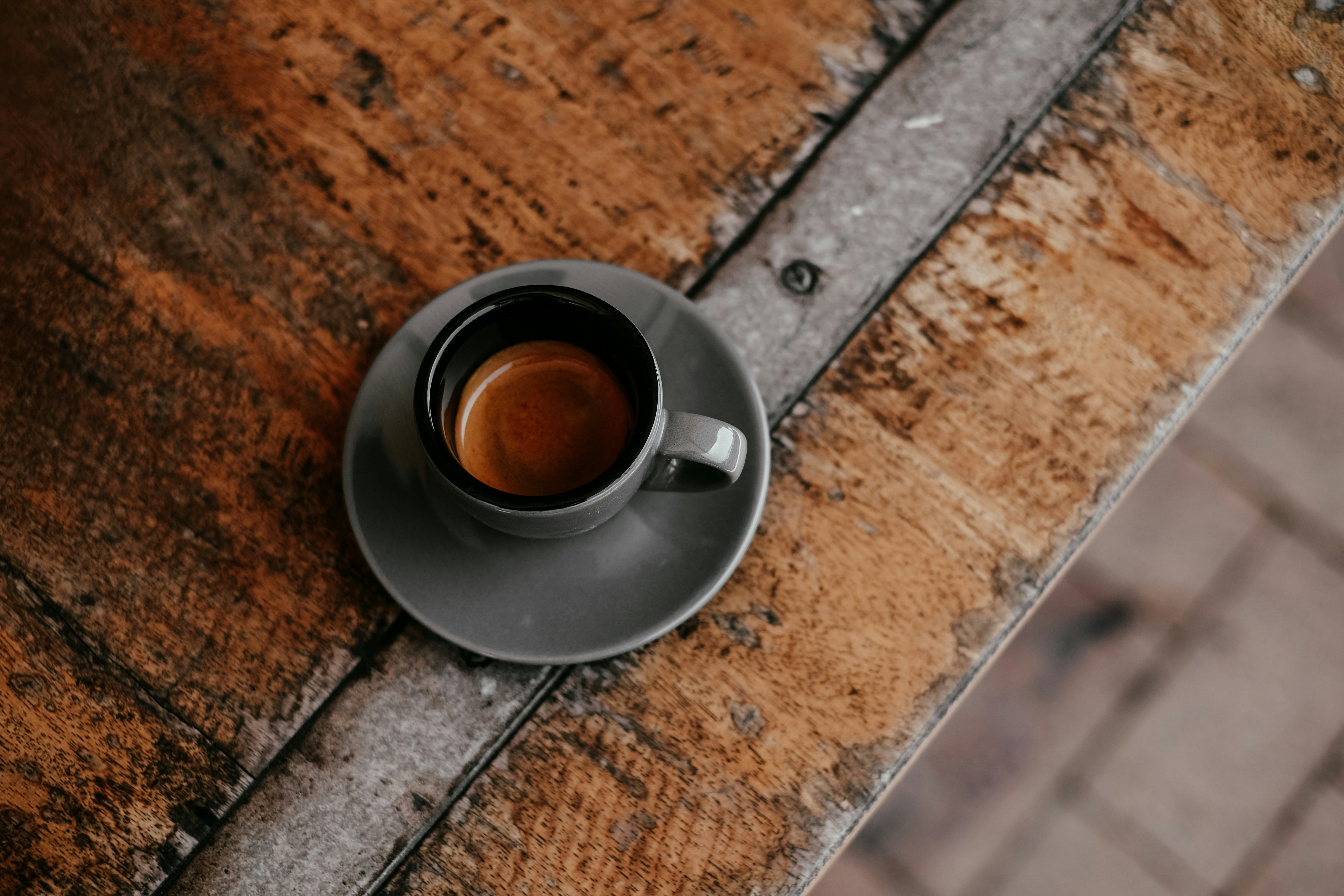
As the world burns through its climate targets, scientists are predicting that coffee as we know it will end by 2050 or sooner.
We’re currently in a shortage.
Inflation took center stage during the U.S. election, and yet both candidates somehow dodged the climate connection. As The Financial Times covered earlier this year, hot weather and drought have beaten countries like Brazil and Vietnam, which together grow more than half the world’s beans.
According to Euro News, Brazil has been dealing with “one of its worst droughts in decades,” with farmers anticipating a 20 percent decline in production this year alone. A September story by the Associated Press confirmed that severe weather has driven coffee prices up nearly 50 percent, and drought has already started to upend next year’s crop. According to NASDAQ, Vietnam has also seen a 20 percent drop in production. The biggest coffee-growing regions are getting anywhere from half to a third of their average rainfall. (For some reason, coffee industry heads are still predicting a surplus. Go figure.)
European countries have started “building up their stocks” as a result. As the Times goes on to report, “Hedge funds and other speculators have piled into bets on Arabica prices rising,” making things worse.
Of course, they would do that.
Maybe it sounds trivial to think about coffee at the end of the world, but there’s a reason. So often, climate scientists and protestors get caught up in big abstract ideas about what the collapse of our planet will look and feel like. Most people can’t wrap their heads around something like that. You have to hit them in the kitchen. It also feels important on a personal level to sit for a minute or two and brace ourselves for a world without coffee. And if you’re not a coffee lover, imagine something else you assumed would always be there.
Because it’s coming…
On average, Americans spend a thousand dollars on coffee every year and drink more than 140 billion cups. It has become a staple of capitalism, helping everyone stay awake and alert or providing them a moment of comfort in an otherwise brutal system of exploitation. Coffee chains have come to symbolize American entitlement. For example, Starbucks has recently revamped their coffee shops to meet a new “four-minute goal,” meaning that a barista must hand-deliver your order with a bright smile in four minutes or less, no matter how complicated it is. As their new CEO has said, “We have to make it easier for our customers to get a cup of coffee… We’re going to be maniacal about getting after it.”
I’m sure baristas can’t wait to get maniacal.
Once again, corporations have turned something we love into yet another means to profit, and in doing so will wind up killing it.
For the less greedy of us, coffee has played an important role in our culture and our individual lives. Psychologists have found that the smell of coffee itself boosts attention and memory, and it can also produce dopamine and serotonin. It’s a way to feel good when the world doesn’t. They’ve also discovered that coffee actually contains serotonin, which regulates our emotions. The more you roast your coffee, the more you increase the serotonin levels. It also contains tryptophan, an important precursor for serotonin and melatonin. Studies have found that one cup of coffee can increase serotonin levels in rats up to 100 percent. They’ve also found that coffee stimulates dopamine levels through a variety of methods. It’s no wonder why so many people turn to it when they feel like crap.
Coffee is there for you.
For those of us who already have a good sense of what’s at stake, it’s worth thinking about the little things every now and then. It’s not just the end of the world. It’s the end of coffee. Can we even prepare for that?
Let’s talk about it.
Scientists have been warning everyone for a decade. A 2016 report by The Climate Institute concluded that coffee production would decline by half over the next three decades. The collapse of our climate has already started killing crops via droughts and floods, fungus, and hotter temperatures.
Hence this year’s shortage.
The coffee world is taking it all seriously. They’re the ones commissioning these reports. Even the CEOs at Nestle will tell you that “30 years from now, basically 50 percent of coffee lands as we know them today will not be viable for coffee production anymore.” This kind of phrasing always bugs me, because it suggests that the land is going to magically vanish all at once.
As we know, it’s a progression.
A report published in Science says 60 percent of the world’s 100+ coffee varieties could die out by the middle of the century, including Arabica and Robusta—which is what most of the world consumes. At this point, given everything we know about the accelerating collapse of our ecosystems, it’s probably going to happen sooner. They say we’d better start preserving those varieties and finding new places to plant them, otherwise it endangers the entire supply.
That’s easier said than done.
Traditional seed storage methods don’t work for coffee beans. If you want to save them, you have to freeze them with liquid nitrogen. Losing all the wild coffee bean varieties would mean giving up genetic diversity, along with any traits that could help the popular ones endure a less hospitable world.
Last year, Bloomberg published a depressing buzzkill about the future of coffee. In a best-case scenario, the world’s farmers will almost certainly have to replace the aromatic and flavorful Arabica coffee because it just can’t stand up to the heat and the unpredictable weather. It doesn’t have to go “extinct” in order to disappear from shelves. It just has to become so difficult to grow that farmers give up and start planting other crops. In places like Vietnam, that’s already happening. Coffee is too much trouble to bother with anymore.
A study in PLOS Climate analyzed coffee yields over the last several decades and confirmed that, yes, it’s getting harder to grow coffee. Even when production goes up, that’s because they’re pouring more resources into it and either planting more or getting creative. So while the total amount of coffee goes up, the amount of coffee farmers are able to get from the same amount of land with the same amount of labor goes down. Most of the world’s coffee is grown in South and Central America, Africa, and Southeast Asia. These happen to be the areas where the climate crisis is hitting first and hardest.
One of the industry’s lead organizations, World Coffee Research, anticipates major shortages by 2040 or sooner, including Robusta.
You know what comes before shortages.
Higher prices.
While we mourn a future without coffee, it’s important to remember that it’s always been an industry filled with deep ethical and moral problems. Many Brazilian coffee farms continue to practice modern slavery. That’s not a hyperbolic term. Farmers are working without pay or the basics of shelter.
From a recent report:
Dozens of recurring violations are documented… such as the absence of employment contracts, payment irregularities, inadequate hygiene facilities and failure to provide drinking water and meals. “There was no fridge, television, closet or table. We had to ‘build’ our own bed, and it was very cold in the house,” said one of the workers rescued from a farm. As a rule, nearly all the accounts mention the lack of provision of personal protective equipment by the employer, an essential and mandatory item for this work.
In August 2022, for example, 20 workers – including a 15-year-old girl and three boys under 18 – were rescued from a farm in the supply chain of Nestlé, where they did not receive regular wages and had to use their own personal protection items. “The water was bad, but we needed to drink. It was dirty, yellow water,” said one of the victims. Surprisingly, the farm had an international sustainability certification from the Rainforest Alliance.
Corporations like Nestle continue to buy from these farms. Certifications and standards don’t seem to help. The farm owners and managers find ways around them. So the sad truth is that the coffee we’re drinking comes from an industry that’s hopelessly corrupt and relies on exploitation to function. As climate change eats into profit margins, that’s going to get worse.
Now, assuming you managed to find an actual ethical coffee planter, maybe you can’t help but think through the logistics of somehow stockpiling it for the apocalypse or maybe even growing your own.
Can you haz coffee?
The short answer: Yes, you can haz coffee. It’s generally accepted that you can store green coffee beans (unroasted) in containers like mylar bags.
They last up to 25-30 years.
If you’re going to store green coffee beans, that means you have to learn how to roast them yourself. After hiking through forums and threads for a few hours, I found Sweet Maria’s Coffee Library, considered the standard go-to guide for beginners. She explains everything you need to do. You can roast them with a fancy appliance, on a stove, over a fire, or in a popcorn popper.
It’s not hard to find places that sell green coffee beans in bulk. The only question is whether you’ve got room for them.
I mean, you could go wild.
I’m sure some tech billionaires have bunkers full of green coffee beans and they think they’ll hire (or force) somebody to roast them. Maybe they think they’ll sip four-minute coffee in their bunkers while Matthew McConaughey discovers five new planets for them to live on.
You can, in fact, grow your own coffee. You’ll want to start on that now. Coffee trees take 3-4 years to flower after planting.
It can take as long as five…
Lurk around threads on Reddit and Quora, and you’ll figure out pretty quick that growing coffee takes a lot of skill and patience.
(If you know different, please share.)
Like so many other topics in prepping, I’m always a little surprised at how long foods like wheat berries and coffee beans can last if stored right. It goes to show how the physical reality of survival isn’t all that hard or complicated. It’s always a matter of means and resources. I, for one, haven’t stored any green coffee beans for the apocalypse just yet.
It feels a little…
On the other hand, who are we to judge someone if they want to hold on to that one little thing at the end of the world? Maybe your daily espresso is important to you. Maybe it’s one of the few comforts you find in life, something that’s been there for you no matter how bad things have gotten so far. In that sense, it’s not some frivolous convenience. You’re not driving through Starbucks and berating some overworked barista over a four-minute unicorn latte. You’re brewing it yourself. You’re sitting there and enjoying every last sip.
It’s not the same thing.
Of course, the end of coffee won’t be the end of caffeine. The kind of caffeine you find in energy drinks? It’s synthetic. You can make it in a lab. So when coffee goes, Americans will probably resort to synthetic substitutes.
For some of us, that’s cold comfort.
The idea of coffee in the collapse raises other interesting questions. It makes you visualize the future. It forces you to imagine how bad everything else would be if you can’t even find coffee at the store anymore, or if it costs so much you have to choose between that and bread.
In that kind of world, you have to wonder if you’d have the time or bandwidth to stand around roasting beans and brewing espresso over a campfire—because let’s face it, you’re probably not using appliances anymore.
If we’re going full doomer, you also have to wonder if you want to broadcast your presence to everyone within smelling distance.
In ten years, you might have other things on your mind than coffee. Then again, maybe a cup of espresso will become more important than ever, giving you one small way to enjoy life while you can.
Coffee reminds us of the two ways to prep. You can stockpile, and you can savor what you know will end one day.
The deeper we get, the less we’re going to split hairs over these things, especially when it wasn’t you or me who did this. It was the billionaires. So if you want to hide some coffee in your closet…
I won’t tell anyone.
Mmmm- we will all need coffee as a “mild” case of asymptomatic sars2 damages our body’s ability to make serotonin. At our brainstem and our gut.
The smell of coffee does bring joy. Since I got long covid and had sepsis, I savor everything as if it will be the last time. Also, since my younger sister killed herself. She was here one minute and seconds later, she was not.
Thus, at the age of 60, I assume that every thing I experience may be the last time.
I will likely be dead by 2050. I won’t see the end of real coffee. ☕️ Maybe we will all be drinking more tea?🫖
I do savor the
Coffee, but come the crossroads
And I'll choose the booze.
(Hastening my demise, but I could live with that.)